
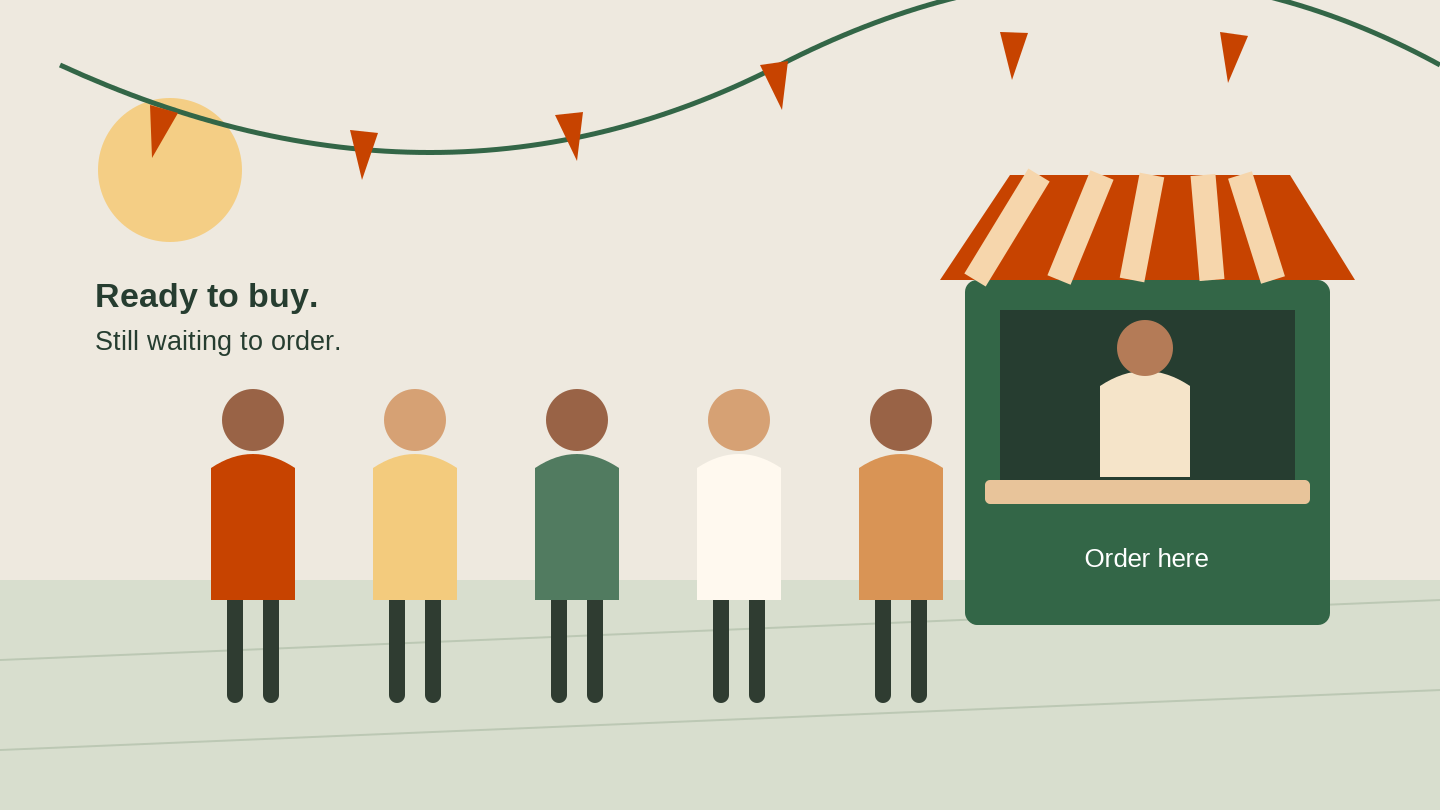
What if the biggest limitation on your sales isn’t how many customers you attract, but how many customers you’re able to take orders from?
Picture this.
You’re running a food stall at a busy event. You’ve got your ingredients, your equipment and your team ready.
People are hungry. Your food smells amazing. Customers are interested.
Business should be booming.
But there’s a problem.
There’s a queue forming outside your stall.
And every person in that queue has to wait their turn just to tell you what they want.
Some customers are still deciding. Others have questions about the menu. Some need to make changes to their orders.
Meanwhile, the people at the back of the queue are waiting.
And some of them are walking away.
The problem isn’t necessarily a lack of demand. It’s how you’re processing that demand.
The Hidden Mathematics of Taking Orders
Let’s do some simple maths.
Imagine you’re trading at an event that lasts eight hours.
That’s 480 minutes of potential selling time.
Now assume it takes an average of 2–3 minutes to serve a customer at your ordering counter.
That includes discussing the menu, deciding what to order, communicating the order and completing the transaction.
With one ordering point, here’s what your theoretical maximum looks like:
| Average ordering time | Orders per hour | Orders in 8 hours |
|---|---|---|
| 2 minutes | 30 | 240 |
| 2.5 minutes | 24 | 192 |
| 3 minutes | 20 | 160 |
Think about that.
Before you’ve even prepared a single meal, you’ve already placed a mathematical limit on how many orders your business can receive.
And these numbers assume your counter is operating continuously, without interruptions.
In reality, customers don’t arrive at perfectly spaced intervals.
They arrive in waves.
During halftime. Between performances. During lunch breaks.
And when 100 hungry customers arrive at roughly the same time, a single ordering counter taking 2.5 minutes per transaction would need more than four hours to process all their orders.
Four hours. Just to take the orders.
Your kitchen could be the fastest kitchen in the world, but it wouldn’t solve that problem.
Because the bottleneck isn’t in the kitchen.
It’s at the counter.
Try your own numbers
How Many Orders Can Your Business Actually Take?
Move the sliders to explore the limit at your ordering counter.
What do these numbers assume?
How we calculate your ordering capacity
This calculator estimates how many orders your business could process through its ordering counters during an event.
It assumes customers are ready to order, each transaction takes approximately the same amount of time, and your counters operate continuously without interruptions.
The model doesn’t account for kitchen preparation, stock availability, payment delays or fluctuations in customer demand.
The important distinction: These numbers represent your theoretical ordering capacity, not guaranteed sales.
For the mathematically curious
H = event duration in hours; T = average ordering time in minutes; C = number of counters; N = customers arriving together.
These calculations assume identical counters, constant transaction times, customers arriving together and efficient distribution across counters.
- Maximum completed orders
- Calculate how many complete transactions each counter can process during the event, then multiply by the number of counters.
C × floor((H × 60) / T) - Orders per hour
- Divide 60 minutes by the average ordering time and multiply by the number of counters. This is a theoretical average rate, so it can be fractional; it is not a count of completed transactions in a particular hour.
(60 / T) × C - Group processing time
- Calculate how many rounds of customers the counters must process, then multiply by the average ordering time.
ceil(N / C) × Tminutes - Final customer’s waiting time
- Calculate how many complete rounds occur before the final customer begins ordering.
floor((N − 1) / C) × Tminutes
“floor” rounds down to a whole number; “ceil” rounds up.
Why Are We Still Taking Orders One Customer at a Time?
Think about how traditional ordering works.
Customer A approaches the counter.
They look at the menu, ask questions, make a decision and place their order.
Only then can Customer B do the same.
Then Customer C.
Then Customer D.
It’s a sequential process.
And here’s the strange part.
Most of the time spent at the counter isn’t necessarily spent doing anything that requires the vendor.
It’s the customer deciding what they want.
Why should your business stop receiving orders while one customer makes up their mind?
That’s the question we asked ourselves when building QueueR.
Same demand. A different way in.
100 customers, represented by six order indicators. A schematic comparison, not a timed simulation.
Traditional ordering
QueueR ordering
Digital ordering changes how orders arrive. It doesn’t make the kitchen faster. Set realistic waiting times and manage incoming demand.
What If 100 Customers Could Order at the Same Time?
Imagine removing that ordering counter as the mandatory entry point.
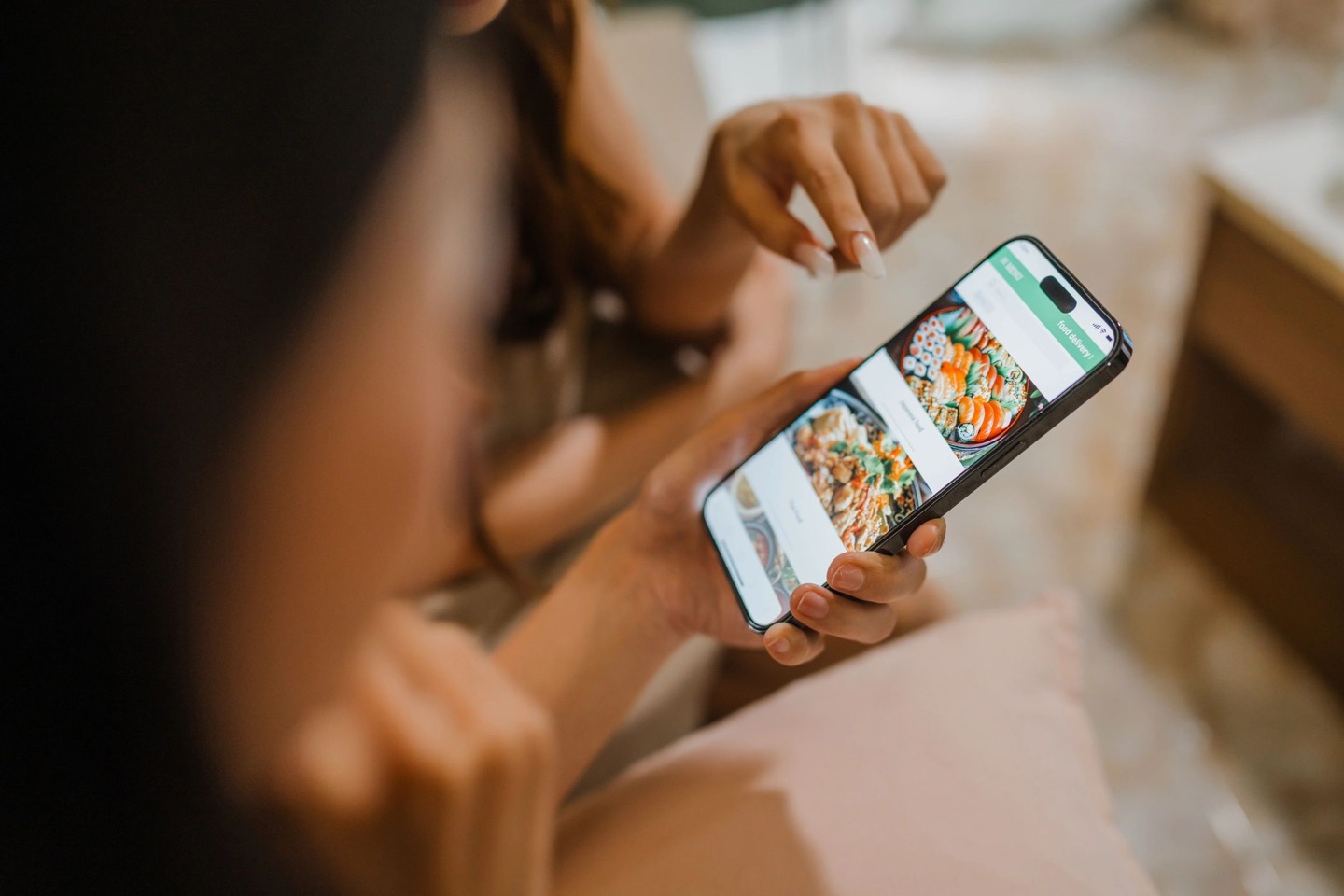
Instead of standing in line, customers scan a QR code, open your digital menu and place their orders directly from their phones.
No app download required.
One customer spends 30 seconds choosing.
Another takes five minutes.
Another orders while sitting with friends on the other side of the venue.
They’re all browsing independently.
And your business can receive their orders without requiring a separate conversation with each customer.
You’ve transformed a sequential process into a parallel one.
Your counter is no longer the only way to communicate an order to your kitchen.
And suddenly, the number of customers you can serve isn’t constrained by how quickly someone can take their orders.
Congratulations. Now Your Kitchen Is the Bottleneck.
Here’s where things get interesting.
Let’s say you’ve removed the ordering bottleneck.
Customers can now submit orders independently.
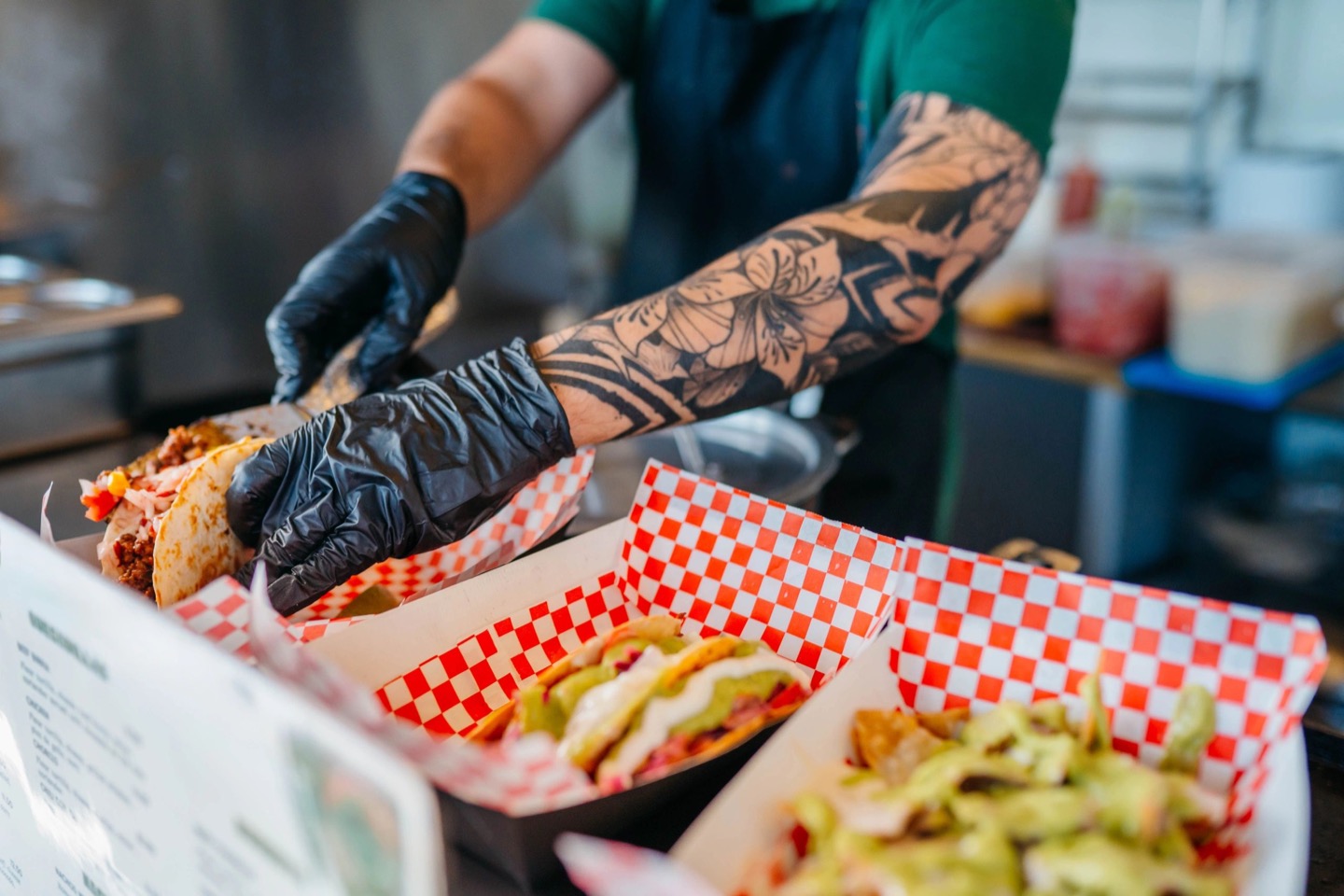
But your kitchen can only prepare 20 meals per hour.
You’ve discovered your next constraint.
And that’s a much better problem to have.
Because now you can ask:
Do we need another grill?
Should we hire another cook?
Can we prepare certain ingredients in advance?
Would a better kitchen workflow increase our output?
These are questions about expanding your business’s capacity.
Not questions about how to get customers through a queue faster.
Of course, your kitchen still needs to manage incoming orders responsibly. Digital ordering doesn’t magically increase cooking capacity, and customers still deserve realistic waiting times.
But you’ve removed an unnecessary barrier between customer demand and your business.
You’re no longer limited by how quickly you can listen to orders. You’re limited by how efficiently you can fulfil them.
And that’s where you want to focus your energy.
Are You Building a Business That Can Handle 100 Orders?
If you’re happy taking 20 orders at an event, your current process might work perfectly well.
There’s nothing wrong with that.
But what happens when you want to take 100?
Or 200?
What happens when your business becomes popular enough that customers start walking away because the queue is too long?
You could hire another cashier.
Then another.
You could buy more point-of-sale equipment.
Or you could rethink the assumption that every customer needs to speak to someone before placing an order.
Growth shouldn’t require your ordering queue to grow with it.
That’s Why We Built QueueR.
QueueR helps food vendors and event businesses receive orders digitally, allowing customers to browse menus, place orders and receive updates without standing in a traditional ordering queue.
For customers, that means less time waiting to order.
For vendors, it means less time manually taking orders and more time focusing on preparing food, fulfilling demand and growing their businesses.
We believe technology should remove unnecessary friction between businesses and their customers.
Because when people want to buy from you, the last thing standing in their way should be a queue.
Skip the line. Join the Queue.